
Acne Scarring Explained: Why Texture Changes Remain After Breakouts
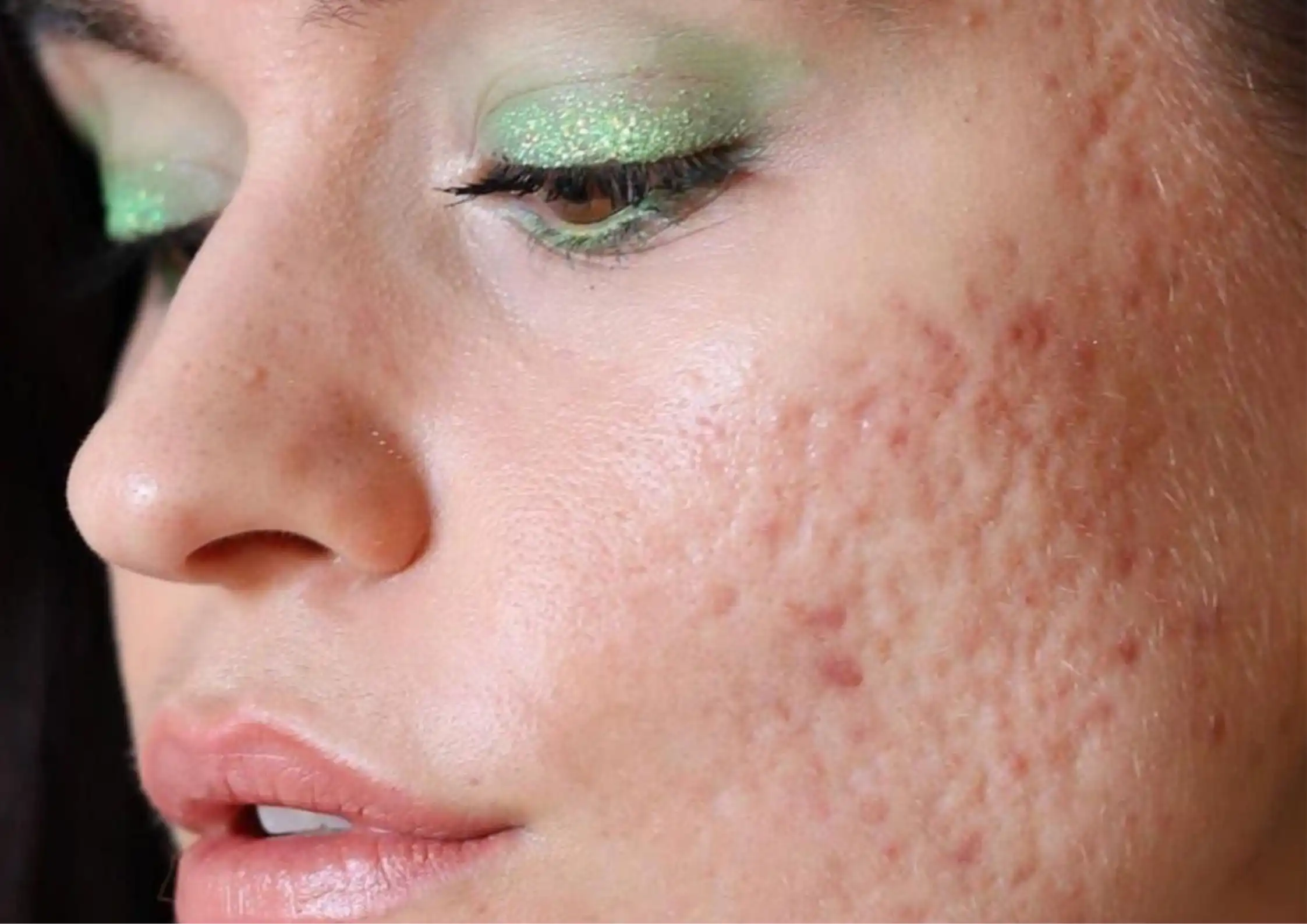
My Acne Has Gone. Why Doesn't My Skin Look The Same?
For many people, clearing active acne feels like it should be the end of the journey.
The breakouts have settled.
The inflammation has reduced.
The painful spots have disappeared.
Yet when they look in the mirror, something still feels different.
The skin may appear uneven.
Certain areas catch the light differently.
Make-up may sit differently than before.
The surface no longer feels as smooth as it once did.
Many people describe it simply as:
"My acne has gone, but my skin hasn't recovered."
This is one of the most common concerns we see after acne has improved.
The reason lies beneath the surface.
Why Does Acne Leave Lasting Changes In The Skin?
Acne is not simply a surface condition.
Inflammation develops within deeper layers of the skin and can affect the structures responsible for maintaining smoothness, strength and tissue integrity.
During an inflammatory breakout, the skin activates a repair response.
In an ideal situation, the tissue heals completely and normal skin architecture is restored.
However, when inflammation is significant, prolonged or recurrent, the repair process may not recreate the original structure perfectly.
Instead, changes can remain within the skin's architecture.
These changes are commonly referred to as acne scarring.
Acne Scars Are Often A Structural Change
Many people think of acne scars as marks on the surface.
In reality, most acne scars are changes within the deeper supporting structure of the skin.
Collagen is a key component of this structure.
When acne-related inflammation disrupts collagen organisation, the skin may heal with:
- Areas of tissue loss
- Uneven collagen distribution
- Irregular skin architecture
- Surface depressions
- Persistent texture changes
This is why acne scarring is often more noticeable in certain lighting conditions.
The issue is not always colour.
The issue is often structure.
Why Texture Changes Are Often More Noticeable Than Marks
Many people focus on post-inflammatory pigmentation because it is visible.
However, texture changes often create greater long-term concern.
Pigmentation reflects a colour change.
Texture reflects a structural change.
As pigmentation gradually fades, uneven skin architecture may remain.
This can present as:
- Small depressions
- Uneven texture
- Roughness
- Reduced smoothness
- Skin that reflects light unevenly
The skin may look healthy overall but still not appear as smooth as it once did.
Different Types Of Acne Scarring
Acne scarring is not a single condition.
Several different scar patterns can develop.
Atrophic Scars
These are the most common acne scars.
They occur when insufficient collagen is produced during healing.
Examples include:
- Ice-pick scars
- Boxcar scars
- Rolling scars
These scars create areas of tissue loss and uneven texture.
Hypertrophic Scars
Less common on the face, these occur when excess collagen is produced during healing.
The scar becomes raised above the surrounding skin.
Post-Inflammatory Pigmentation
Although technically not a scar, pigmentation often develops following inflammation and can coexist with textural scarring.
Why The Skin Doesn't Always Repair Itself Completely
Many people assume that skin should naturally regenerate over time.
While the skin possesses remarkable healing capabilities, repair is not always the same as restoration.
The body prioritises healing.
It does not necessarily recreate the exact skin architecture that existed before inflammation occurred.
As a result, the skin may become stable and healthy while still retaining evidence of previous damage.
This is why acne scars can persist long after active acne has resolved.
The Goal Is Not To Hide The Scar
One of the biggest misconceptions surrounding acne scarring treatment is that the objective is to remove scars entirely.
In reality, treatment focuses on improving skin architecture.
This means supporting:
- Collagen remodelling
- Tissue repair
- Skin quality
- Surface smoothness
- Structural integrity
The objective is to encourage the skin to behave more like healthy, organised tissue again.
How We Approach Acne Scarring At ULANDA
At ULANDA, we view acne scarring through the lens of skin architecture rather than surface appearance alone.
Before discussing treatment options, we first seek to understand:
- The type of scarring present
- The severity of tissue change
- Current skin behaviour
- Barrier health
- Inflammation levels
- Skin sensitivity
- Previous treatment history
Every recommendation begins with understanding what the skin needs biologically.
Treatment Approaches Commonly Considered For Acne Scarring
Treatment recommendations vary according to scar type, skin type and overall skin health.
Approaches may include:
- Microneedling — Microneedling creates controlled stimulation within the skin to encourage collagen remodelling and improve skin texture over time.
- Polynucleotides — Polynucleotides support tissue repair and regeneration by creating a healthier biological environment for collagen activity.
- PRP Skin Regeneration — Platelet-Rich Plasma uses growth factors derived from your own blood to support tissue repair and regenerative processes.
- Chemical Peels — Selected chemical peels may help improve overall skin quality and support surface renewal when appropriate.
- LED Light Therapy - LED Light Therapy may be used to support recovery and reduce inflammation as part of a broader treatment strategy.
Why Early Treatment Matters
The earlier scar formation is understood, the more options are typically available.
This does not mean treatment must happen immediately.
It means understanding the skin's current condition allows for better planning and more realistic expectations.
Acne scarring is rarely improved through a single treatment.
Meaningful improvement is usually achieved through a structured approach focused on long-term skin quality and tissue remodelling.
Understanding Before Treatment™
Many people arrive expecting a recommendation for a specific procedure.
What they often need first is clarity.
What type of scar is present?
How much of the concern is pigmentation?
How much is structural?
What is realistically achievable?
These questions matter far more than selecting a treatment from a list.
At ULANDA, every acne scarring journey begins with understanding the biology of what has changed and developing a personalised plan to support healthier skin architecture over time.
Because the goal is not simply to treat a scar.
It is to help the skin move towards a stronger, smoother and more resilient version of itself.
Frequently Considered For
- Acne Scarring
- Rolling Acne Scars
- Boxcar Scars
- Ice Pick Scars
- Uneven Skin Texture
- Post-Acne Skin Changes
- Enlarged Pores
- Skin Surface Irregularities
- Post-Inflammatory Pigmentation
- Long-Term Skin Quality Improvement
Related Treatment Approaches
- Microneedling
- Polynucleotides
- PRP Skin Regeneration
- Chemical Peels
- LED Light Therapy
Related Clinical Topics
- Inflammaging: The Silent Driver Behind Premature Skin Ageing
- Collagen Decline Explained: Why Skin Loses Firmness Over Time
- Inflammation-Driven Pigmentation: Why Sensitive Skin Develops Dark Spots
- Over-Exfoliated Skin: Signs, Symptoms and How to Reverse Skin Barrier Damage
- Photoaging Explained: How UV Exposure Changes Skin Structure Over Time
Mentioned Treatments
Explore the treatments discussed in this article.
Microneedling
Collagen-induction treatment designed to improve texture, pores, acne scarring and long-term skin quality.
Polynucleotides
Regenerative injectable treatment supporting tissue repair, collagen production and long-term skin resilience.
PRP Skin
Your own growth factors for natural regeneration
Chemical
Clinical skin resurfacing designed to improve pigmentation, texture, dullness and long-term skin quality.
LED Light
Nurse-led, non-invasive LED light therapy designed to regulate inflammation, support collagen activity and accelerate tissue recovery.
Related Conditions
Conditions discussed in this clinical journal article.
Related Signatures
Structured regenerative pathways related to this topic.
Ready to restore your skin?
Book a Advanced Skin Health Consultation with our Advanced Nurse Practitioner to discuss a personalised clinical plan for your skin.
Begin with a Clinical Assessment
Every ULANDA journey starts with our Advanced Skin Health Consultation — a 60–90 minute clinician-led assessment including AI skin analysis, barrier evaluation and personalised treatment planning. The £175 fee is fully redeemable against your treatment plan.