
Why Your Face Changes Before You Notice More Wrinkles

There comes a moment when you notice something different about your face.
Perhaps your eyes appear more tired, even after a good night's sleep. Your cheeks seem less defined, or your jawline has become softer.
Yet when you look closely, you may not see significantly more wrinkles.
You simply feel that something has changed.
For many women, this is one of the more difficult aspects of facial ageing to describe. The change is noticeable, but its cause is not immediately obvious.
We often associate facial ageing with lines and wrinkles. In reality, our facial appearance depends on much more than the surface of the skin.
Collagen, facial fat, supporting tissues and underlying bone all contribute to the contours we recognise as our own.
And these structures do not necessarily change at the same time or in the same way.
Understanding those differences is an important first step towards making informed decisions about skin rejuvenation.
The ULANDA Clinical Perspective
What Your Face May Be Telling You
Facial Ageing Happens Beneath the Surface, Too
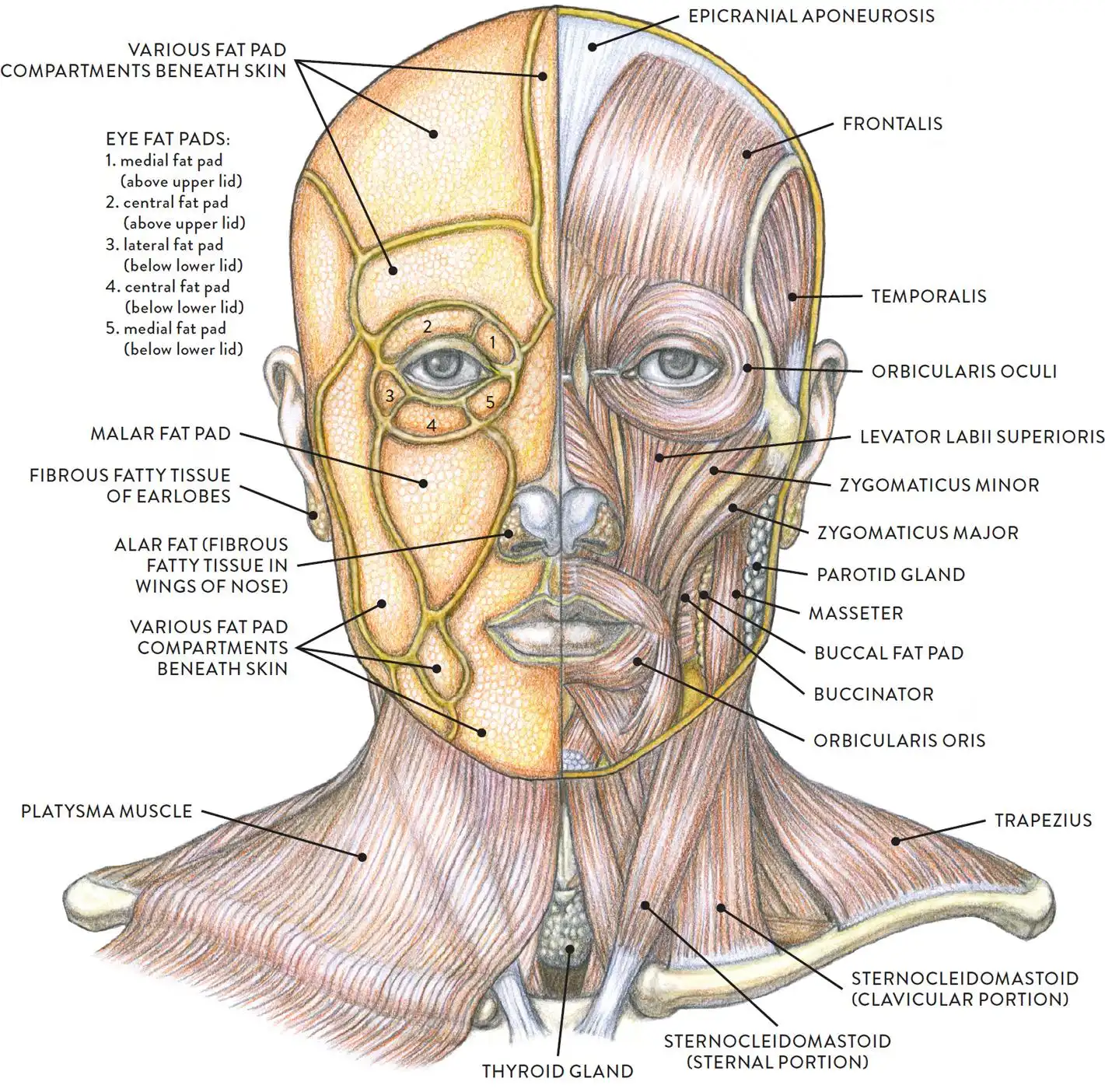
Facial appearance depends on multiple anatomical layers — outer skin, deep dermis, superficial and deep fat compartments, ligaments, and underlying bone.
Your face is supported by several interconnected anatomical layers.
The outer skin provides a protective barrier, while the deeper dermis contains collagen, elastin and other components that contribute to skin strength, flexibility and resilience.
Beneath the skin, facial fat compartments help create volume and contour.
Supporting ligaments and connective tissues contribute to the position of facial structures, while the underlying bones provide the framework on which these tissues rest.
Together, these layers influence how the face looks and moves.
Over time, changes can occur throughout this system.
Collagen content and organisation may change, affecting skin firmness and elasticity. Facial fat can diminish or redistribute, altering the contours of the cheeks and under-eye area. Supporting tissues may change, while gradual changes in facial bone structure can also influence appearance.
The result is not always an increase in wrinkles. Sometimes, it is a change in shape.
A cheek that once appeared fuller may look flatter. The transition between the lower eyelid and cheek may become more noticeable. The jawline may lose some of its previous definition.
These changes can occur independently or together, which is why two women with similar concerns may require very different approaches.
Why Collagen Matters — but Is Not the Whole Story
Collagen is one of the principal structural proteins within the skin. It contributes to the strength and organisation of the dermis, helping skin maintain firmness and resilience.
As collagen changes with age, the skin may become thinner, less elastic or more prone to fine lines and crepiness.
Sun exposure is another important influence. Ultraviolet radiation contributes to collagen degradation and changes in skin texture, pigmentation and elasticity — collectively associated with photoageing.
Hormonal changes can also influence skin structure. During perimenopause and menopause, changes in oestrogen levels may contribute to reduced collagen, increasing dryness and changes in elasticity.
However, collagen loss alone does not explain every change in facial appearance.
Under-eye hollows, cheek flattening and jawline softening may also involve changes in fat distribution, tissue position or underlying skeletal support.
Two Distinct Objectives
A personalised approach begins by understanding which of these factors is most relevant.
Why Your Eyes, Cheeks and Jawline May Change Differently
Although facial ageing is often discussed as a single process, different areas of the face can change in different ways.
Understanding these distinctions helps explain why a treatment that works well for one concern may not be suitable for another.
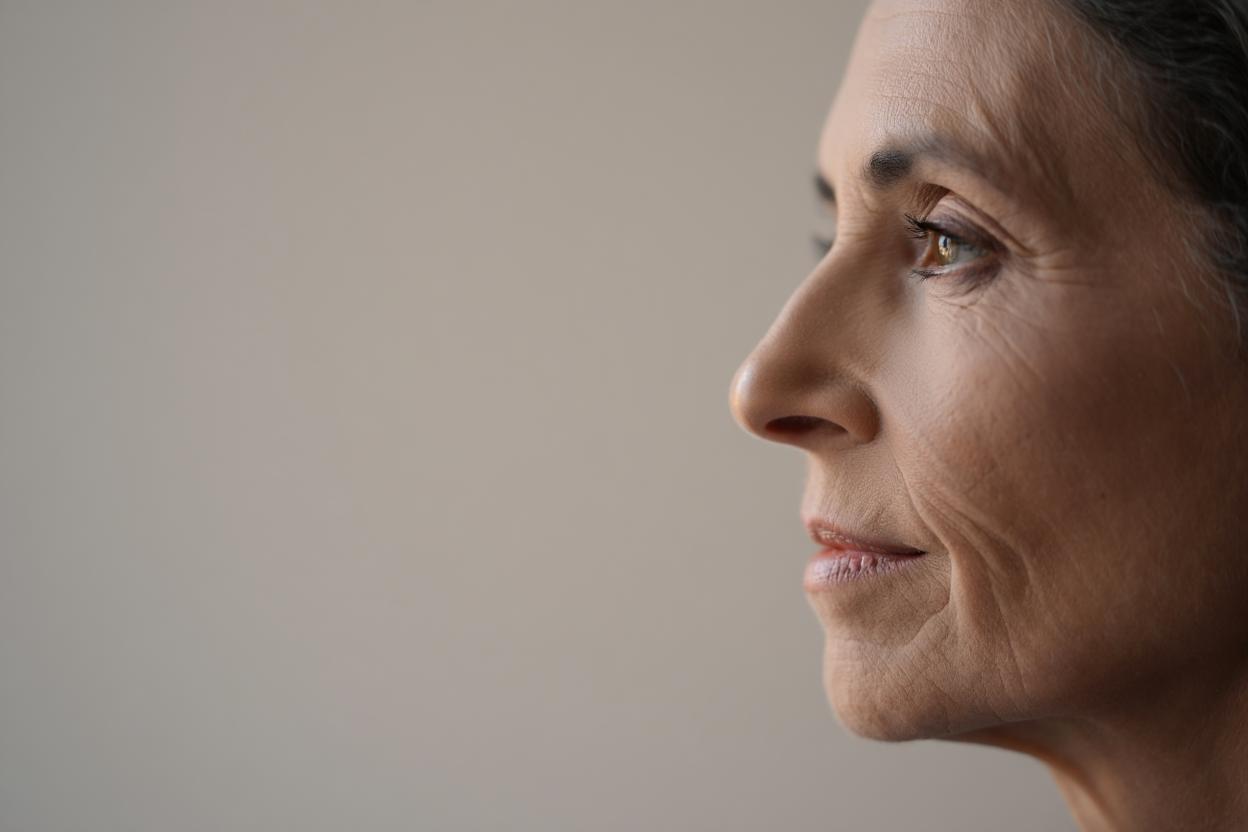
Different areas of the face age through different anatomical mechanisms — under-eye hollowing, cheek descent and jawline softening each require distinct clinical approaches.
When Your Eyes Look Tired Even After Rest
The under-eye area is particularly delicate. The skin is relatively thin, making changes in pigmentation, hydration and tissue quality more noticeable.
However, tired-looking eyes are not always caused by poor sleep or skin quality alone.
Shadows may result from differences in pigmentation, vascular visibility, natural facial anatomy or changes in the relationship between the lower eyelid and cheek.
Where under-eye hollowing is present, the concern may involve deeper tissue volume rather than the skin itself.
This distinction matters because a treatment intended to improve skin quality cannot necessarily correct a structural hollow. Equally, adding volume may not address pigmentation or crepey skin.
Understanding the cause is therefore more useful than treating every under-eye concern in the same way.
Explore related concerns: Dark Circles, Under-Eye Hollows and Under-Eye Crepiness.
When Your Cheeks Appear Less Lifted
The cheeks play an important role in facial balance. Their appearance depends on skin quality, facial fat, connective tissues and underlying bone structure.
As these components change, the cheeks may appear flatter or less defined. Some women notice that the transition between their cheeks and lower face has become less distinct.
Others describe a general loss of firmness, even though their facial volume appears relatively unchanged.
These experiences may reflect different anatomical changes. A reduction in skin firmness is not the same as a loss of facial fat, and neither necessarily requires the same treatment.
The objective should be to understand what is contributing to the change before deciding whether skin-quality support, structural treatment or volume correction is appropriate.
When Your Jawline Becomes Softer
A softer jawline is another common concern. It can occur alongside changes in skin elasticity, tissue position, facial fat distribution and the supporting structures of the lower face.
For some women, skin laxity is an important factor. For others, changes in facial contour or tissue distribution contribute more significantly.
This is why jawline definition cannot always be improved simply by adding volume. The appropriate approach depends on understanding the underlying anatomy, the degree of change and the result the individual hopes to achieve.
Explore related concerns: Loss of Skin Firmness, Skin Laxity and Lower-Face Changes.
Hormonal Changes Can Influence How Your Skin Ages
Not every change in facial appearance is driven by chronological ageing alone. Hormonal transitions can affect skin behaviour, sometimes making existing concerns more noticeable.
Following pregnancy, women may experience changes in pigmentation, hydration, sensitivity and skin condition. These can be influenced by hormonal shifts, changes in routine and other postpartum factors.
During perimenopause, fluctuating hormone levels may contribute to changes in skin hydration, texture and sensitivity.
Following menopause, declining oestrogen is associated with changes in dermal collagen, skin thickness, elasticity and moisture retention. These effects vary considerably between individuals.
Importantly, hormonal skin changes should not automatically be interpreted as facial volume loss.
A woman who notices increasing dryness and reduced skin firmness may have different priorities from someone experiencing pronounced changes in facial contours.
Understanding the relationship between skin quality, hormonal change and facial anatomy helps ensure that treatment recommendations remain appropriate to the individual.
Explore related concerns: Menopause-Related Skin Changes, Dry and Dehydrated Skin, Hormonal Pigmentation and Postpartum Skin Changes.
Photoaging & Skin Architecture: Understanding the Whole Face
At ULANDA, we approach facial rejuvenation through an understanding of the relationships between skin quality, facial structure and the changes that influence appearance.

Our Photoaging & Skin Architecture Signature Programme begins with comprehensive 3D clinical imaging to assess skin quality, tissue support, and facial volume distribution.
Our Photoaging & Skin Architecture Signature Programme is built around this principle.
Rather than beginning with an individual procedure, the programme considers the face as an interconnected structure.
The assessment explores skin quality, collagen-related changes, pigmentation, facial contours, tissue support and volume distribution. It also considers relevant factors such as sun exposure, hormonal changes, previous treatments and individual treatment preferences.
This helps distinguish between concerns that may benefit from improving skin quality and those that may require a different approach.
For example, a woman concerned about tired-looking eyes may have pigmentation, thin under-eye skin, hollowing or a combination of these factors. A woman noticing a softer jawline may be experiencing changes in skin elasticity, tissue position or facial contour.
Although the visible concerns may appear similar, the appropriate strategies may be different. The programme is therefore not a fixed combination of procedures.
It is a personalised framework for understanding facial change and deciding what, if anything, requires treatment.
Architecture Before Volume™
The principle is simple: understand the structures contributing to facial appearance before deciding whether volume replacement is appropriate.
Different Treatments Have Different Roles
Once the underlying concern has been assessed, individual treatments may be considered. But no single procedure addresses every aspect of facial ageing.
Treatments have different purposes, limitations and suitability requirements.
Supporting Delicate Under-Eye Skin
Treatments such as polynucleotides and PRP may be considered in selected circumstances where improving aspects of skin quality is the objective.
Evidence for specific applications varies, and expected benefits should be discussed during consultation. These treatments do not replace lost facial volume or correct every cause of dark circles.
Supporting Collagen-Related Skin Quality
Selected collagen-stimulating treatments, including certain biostimulators, may be considered where changes in skin quality or tissue support are relevant.
Their effects vary according to the product, treatment area and individual response. They should not be regarded as interchangeable with volume replacement or tissue repositioning.
Addressing Changes in Tissue Position
Thread-based treatments may offer modest tissue repositioning in carefully selected patients.
However, their suitability, limitations, duration of effect and potential complications require careful clinical consideration. They are not appropriate for every presentation of facial laxity.
Addressing Genuine Volume Loss
Dermal fillers may have a role where loss of facial volume is contributing to the concern.
Their purpose differs from treatments primarily intended to support skin quality or collagen-related changes. The decision to use fillers should follow an assessment of facial anatomy, treatment goals, potential benefits and risks.
Supporting Lower-Face Definition
A softer jawline may involve several overlapping anatomical changes. Depending on the assessment, different treatment approaches may be discussed.
In some cases, treatment may not be necessary or may offer only limited improvement.
Helen's Clinical Perspective: Looking Beyond What We See
One of the things I hear regularly in clinic is:
“Helen, I don't want to change my face. I just want to look more like myself.”
I think that captures what many women are really looking for.
When someone is concerned about tired-looking eyes, less-defined cheeks or a softer jawline, I don't believe we should automatically begin by discussing fillers or lifting treatments.
I prefer to understand what's happening across the face.
Is the skin becoming thinner? Has tissue support changed? Is there genuine volume loss? Or are several changes contributing to what we're seeing?
Those questions matter because the right approach for one woman may be completely different for another.
For me, natural-looking rejuvenation begins with understanding facial structure, not simply correcting what we see in the mirror.
The Question Worth Asking Before Choosing Facial Rejuvenation
When women begin exploring facial rejuvenation, the conversation often centres on treatment names.
- Should I have fillers?
- Would a skin booster help?
- Is collagen stimulation what I need?
- Would a lifting treatment improve my jawline?
These are reasonable questions, but they are not necessarily the best place to begin.
A more useful question is:
The Guiding Question
The answer may involve the skin, deeper facial tissues, changes in volume or several factors together.
Sometimes the most appropriate recommendation may be skincare, a gradual treatment strategy or monitoring changes over time.
Sometimes a targeted procedure may be appropriate. And sometimes, no treatment is necessary.
This is the thinking behind ULANDA's Understanding Before Treatment™ philosophy. The aim is not to recommend more treatment. It is to help women make better-informed decisions about the treatments they may be considering.
The ULANDA Approach: Four Principles Behind Every Recommendation
- Understanding Before Treatment™: We begin by understanding your concerns and the biological and anatomical changes influencing your skin and facial appearance.
- Architecture Before Volume™: We consider facial support, skin quality and proportion before deciding whether volume correction is appropriate.
- Prevention Is Structural Strategy™: Understanding emerging changes can support informed decisions about skin health, sun protection, treatment and healthy ageing.
- Healthy Ageing Begins With Understanding™: Our aim is to help you make confident, informed choices while respecting your natural facial features.
Together, these principles guide the ULANDA approach to personalised skin health and regenerative aesthetics.
Begin With an Advanced Skin Health Consultation
Two women may notice similar under-eye shadows, changes in their cheeks or a softer jawline for entirely different reasons.
One may be experiencing changes in skin quality. Another may have genuine volume loss. A third may have several contributing factors.
An Advanced Skin Health Consultation provides an opportunity to explore your concerns, assess your skin and facial structure, and discuss which approaches, if any, may be appropriate.
You do not need to know which treatment you want before coming to ULANDA. You simply need to tell us what you have noticed.
Continue Your Skin Shift™
Your Free Guide to Understanding Skin Change
If you would like to understand more about how collagen, hormones and skin biology influence healthy ageing, explore The Skin Shift™.
Our free educational guide is designed to help you understand your skin before deciding what comes next.
Understanding Changes Everything. Treatment Simply Follows.
**ULANDA | Skin Health & Regenerative Aesthetics** *Thoughtful care. Personalised understanding. Natural-looking outcomes.*
Mentioned Treatments
Explore the treatments discussed in this article.
Polynucleotides
Regenerative injectable treatment supporting tissue repair, collagen production and long-term skin resilience.
PRP Skin
Your own growth factors for natural regeneration
Biostimulators
PLLA • PDLLA • CaHA — The Structural Foundation of Natural Aesthetics
Dermal Fillers
Subtle volume • Contour refinement • Balance
Thread Lifts
The artistry of lifting without surgery—restoring structure, contour and youthful support.
Related Conditions
Conditions discussed in this clinical journal article.
Related Signatures
Structured regenerative pathways related to this topic.
Frequently Asked Questions
Facial ageing happens beneath the surface too. Beyond superficial skin wrinkles, natural changes in collagen organisation, facial fat pad redistribution, ligament laxity, and gradual bone resorption alter the underlying contours and shape of the face before significant lines emerge.
Tired-looking eyes are frequently caused by structural changes rather than fatigue alone. Thinning delicate under-eye skin, increased vascular visibility, shifts in the junction between the lower eyelid and cheek, or deep under-eye hollowing (tear trough volume loss) cast persistent shadows regardless of sleep.
Not necessarily. A flatter cheek appearance may be caused by true volume loss, but it is often driven by reduced skin firmness, dermal collagen breakdown, or laxity in deeper supporting ligaments. Adding filler volume when the issue is skin laxity or collagen loss can lead to an unnatural, overfilled appearance.
A softer jawline often involves overlapping anatomical factors, including skin laxity, lower-face fat redistribution, platysma muscle tension, and gradual changes in mandibular bone support. Simply injecting dermal filler along the jaw without addressing tissue descent can add heaviness rather than restoring clean definition.
Skin quality refers to the dermal condition—thickness, hydration, elasticity, and cellular turnover supported by collagen and elastin. Facial volume refers to deeper fat compartments and skeletal contours that provide projection and structure. Improving skin quality requires biostimulatory or regenerative treatments, whereas true structural deficit is managed differently.
Declining oestrogen levels during perimenopause and menopause accelerate dermal collagen loss, reduce hydration and lipid barrier function, and can make underlying structural changes such as fat descent and bone thinning become noticeably more pronounced.
Architecture Before Volume™ is our foundational clinical principle: we always assess and support the underlying interconnected anatomical structures—skin barrier, dermal thickness, collagen network, and tissue positioning—before deciding whether adding facial volume is appropriate or necessary.
Polynucleotides and PRP (Platelet-Rich Plasma) are bio-regenerative treatments designed to improve skin quality, microcirculation, hydration, and cellular repair in delicate zones like the under-eye area. They restore tissue health without adding artificial volume or risking the puffy overcorrection that fillers can cause.
It is ULANDA's structured, nurse-led clinical programme that evaluates the face as an interconnected biological structure. Combining deep diagnostic 3D facial imaging, barrier restoration, targeted collagen stimulation, and structural support, it delivers an individualised plan tailored to your anatomical pattern of change.
ULANDA is a nurse-led regenerative aesthetics clinic in Ware, Hertfordshire (SG12). We provide comprehensive Advanced Skin Health Consultations for clients across Ware, Hertford, Hoddesdon, Broxbourne, Bishop's Stortford, Cheshunt, and St Albans seeking natural-looking, medically guided rejuvenation.
Ready to restore your skin?
Book a Advanced Skin Health Consultation with our Advanced Nurse Practitioner to discuss a personalised clinical plan for your skin.
Begin with a Clinical Assessment
Every ULANDA journey starts with our Advanced Skin Health Consultation — a 60–90 minute clinician-led assessment including AI skin analysis, barrier evaluation and personalised treatment planning. The £175 fee is fully redeemable against your treatment plan.